
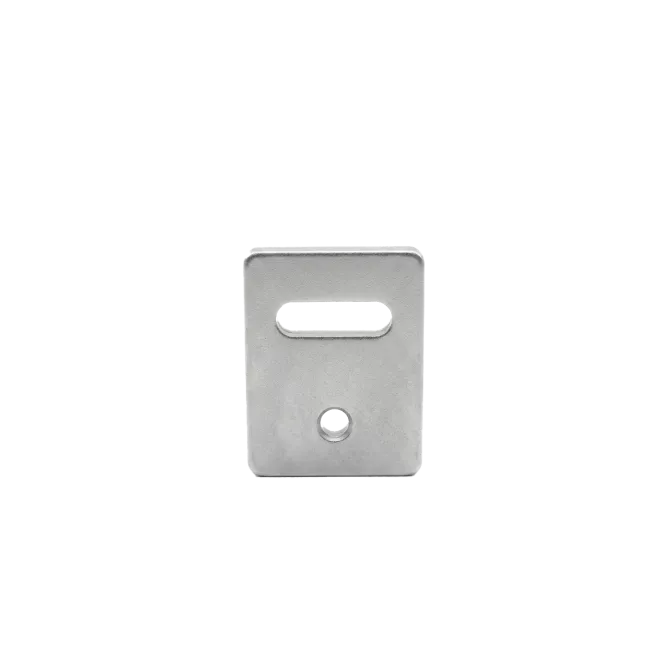
Fixation plates for 25 and 50 mm webbing, ultimate loads from 800 to 1 200 daN. Aluminium or zinc-plated steel. Bolt-down attachment points for restraint strap assemblies.
Data sheet
Fixation plates are flat anchor parts used to bolt the end of a webbing strap to the airframe, a load platform or any structure with matching threaded holes. The webbing loops through the plate, and one or two through-holes take the fixing bolts that hold the plate to the structure.
The range covers 25 mm and 50 mm webbing widths. 25 mm versions have a single 6 mm or 10 mm hole, available in zinc-plated steel at 1 000 daN or in aluminium at 800 daN for weight-sensitive installations. A 50 mm version with two 6 mm holes is rated at 1 200 daN. Unit weights run from 20 g for the aluminium versions to 110 g for the 50 mm steel plate.
Stocked as spare parts, compatible with the corresponding GPI Forankra webbing widths.
16 other products in the same category:
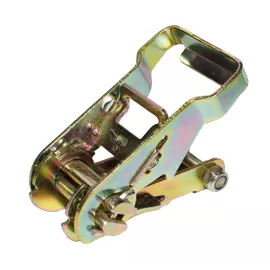
Ratchet buckles are manual tensioning devices for restraint and lashing straps. The ratchet mechanism applies and holds high tension in controlled increments, which makes it the standard choice for...

The ASNA flat polyester webbing range is manufactured in conformity with Airbus ASNA 3573 standards and is approved for use in aircraft applications under FAR 25 appendix F. It is used for...
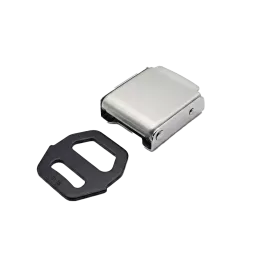
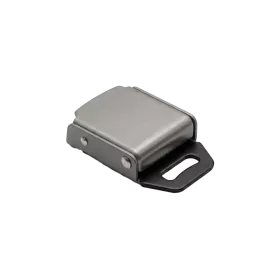
This aircraft seatbelt buckle is used in cabin seat belt and occupant restraint assemblies. It supplies the quick-release connection between the two webbing ends, with male and female parts forming...
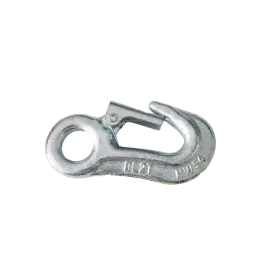
This hook combines a fixed eye for permanent attachment with a hooking end fitted with a safety latch. The eye is sewn or pinned to the net edge, and the latched hook engages cabin anchor rings,...
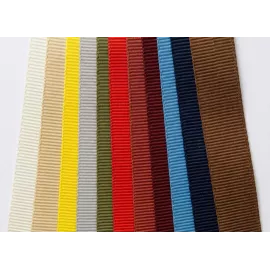
This range of 25 mm flat polyester webbing is used for restraint and lashing assemblies in air transport, where strength, regulatory compliance and color identification matter. It is approved for...
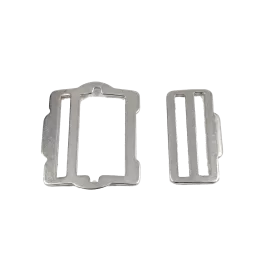
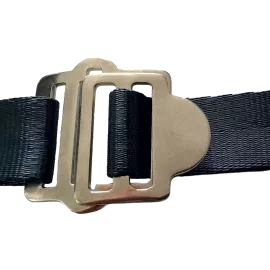
Belt buckles supply a quick connection for light belt and restraint assemblies, with male and female parts forming the complete buckle. They are used for equipment belts, light cabin restraints and...
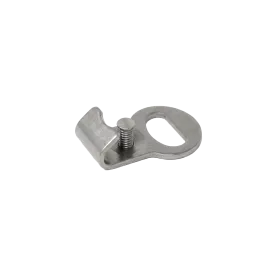
Flat hooks are end fittings for restraint strap assemblies, connecting the webbing to cabin anchor rings, footman loops and floor fittings. The open-throat shape gives fast hook-on and hook-off in...
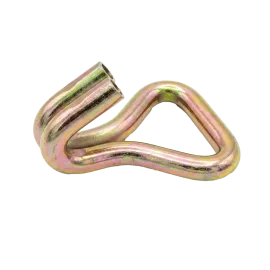
Double J hooks are end fittings formed of two J-shaped wire fingers joined to a triangular webbing loop. The two fingers hook onto bars, floor fittings and anchor points, giving a stable engagement...
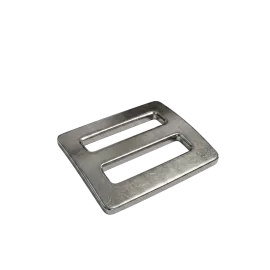
Adjusting plates are flat steel parts with internal slots that let the webbing fold back on itself and lock by friction, setting the strap length without a buckle. They are used where the assembly...
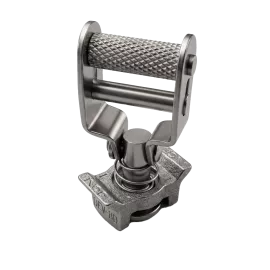
This single stud fitting integrates a length adjuster on the stud body, so one component handles both the seat track or pallet anchor and the adjustment of the connected strap. It simplifies...
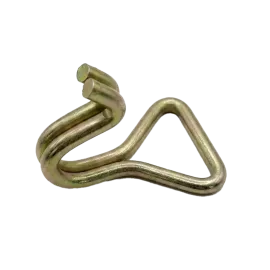
The hook with keeper is a two-part strap end fitting used for a secured attachment to an anchor ring or bar. Both the male part (a double J hook with keeper wire on a delta ring) and the female...
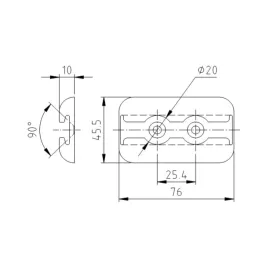
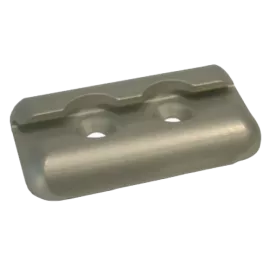
This aluminium double anchor plate provides a reinforced attachment point for stud fittings in cargo restraint assemblies that call for a higher load rating than the standard anchor plate. It...
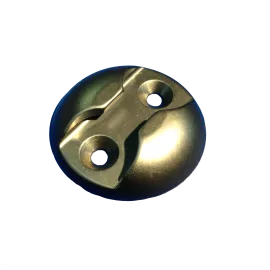
This aluminium anchor plate provides a fixed attachment point for single stud fittings in cargo restraint assemblies. It is used to anchor straps and nets to the aircraft structure or to load...
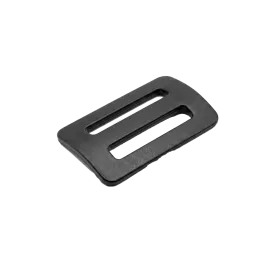
The bi-pass buckle is a flat two-slot steel plate for 50 mm webbing. The webbing passes through one slot and back through the second, where it locks by friction. Depending on how it is threaded,...
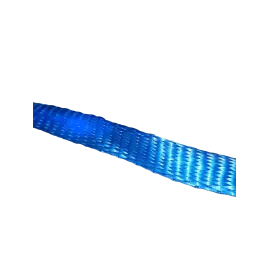
This tubular polyester webbing is used for corner ropes and lashing assemblies in air transport. The tubular construction spreads the load around the full circumference of the strap, which limits...
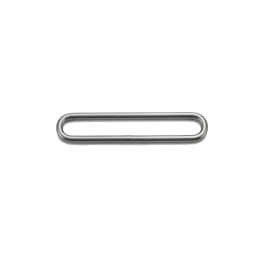
Rectangular rings are designed to connect two different webbing for an assembly. The range covers four rectangular sizes from 16 to 23 mm with ultimate loads from 100 to 300 daN, and one small...
Fixation plates for 25 and 50 mm webbing, ultimate loads from 800 to 1 200 daN. Aluminium or zinc-plated steel. Bolt-down attachment points for restraint strap assemblies.