
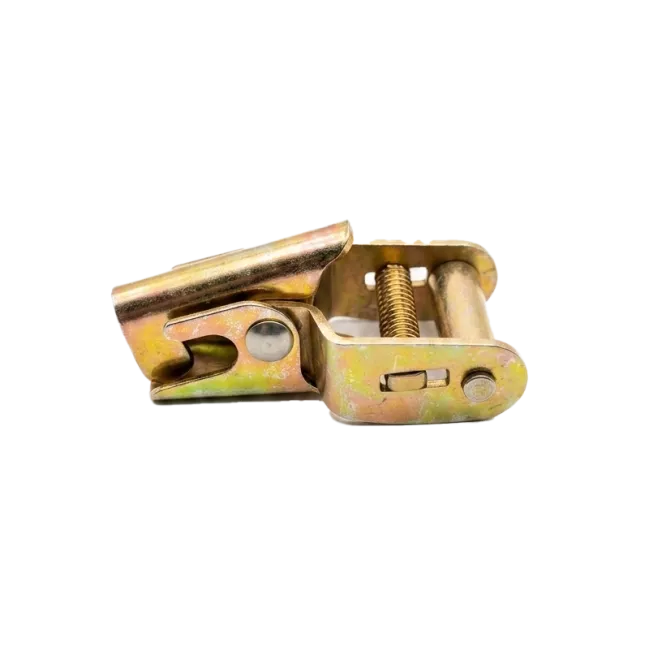
Snap latches for 25 mm webbing, 680 daN ultimate load, zinc-plated steel. Spring-loaded quick-release closure for cabin restraint and equipment assemblies.
Data sheet
Snap latches are spring-loaded closures used in cabin restraint and equipment assemblies, where a strap needs to be opened and re-closed often and without tools. A press on the latch releases the connection; closing it locks back automatically. This part also includes an adjuster, allowing the user to change the tension easily.
Two references cover the range, both at 680 daN ultimate load on 25 mm webbing: a standard version (64.7 mm long, 77 g) and a version with a shorter end (63.75 mm, 77.6 g) for tighter installation envelopes. Construction is zinc-plated steel for corrosion resistance.
Stocked as spare parts for cabin and equipment strap assemblies.
16 other products in the same category:
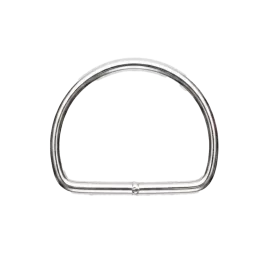
D-rings are half-round anchor parts used as fixed attachment points for restraint strap and net assemblies. The flat side takes the webbing loop and the round side receives the hook, snap or...
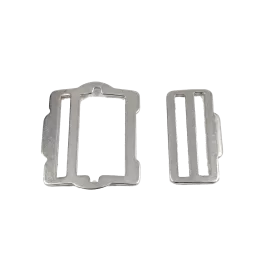
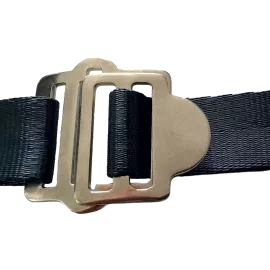
Belt buckles supply a quick connection for light belt and restraint assemblies, with male and female parts forming the complete buckle. They are used for equipment belts, light cabin restraints and...
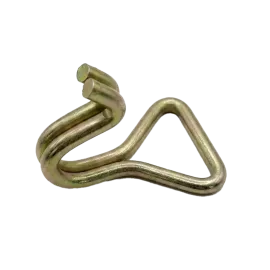
The hook with keeper is a two-part strap end fitting used for a secured attachment to an anchor ring or bar. Both the male part (a double J hook with keeper wire on a delta ring) and the female...
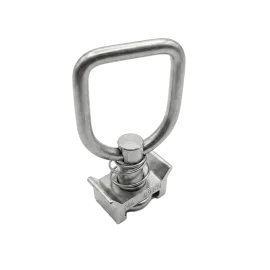
Single stud fittings with rings give a one-position anchor point on a seat track or air cargo pallet rail, with an integrated ring that takes the strap or hook directly. They are used for...
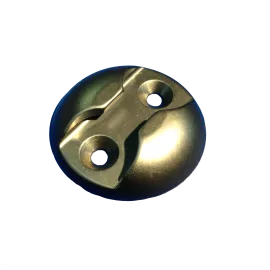
This aluminium anchor plate provides a fixed attachment point for single stud fittings in cargo restraint assemblies. It is used to anchor straps and nets to the aircraft structure or to load...
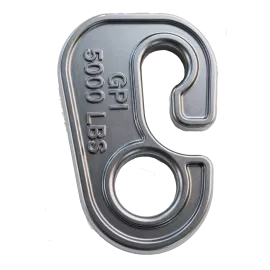
The cargo hook is mounted on the cargo net itself and engages directly in the net mesh to set the working height of the net and adjust its tension over the load. Repositioning the hook from one...
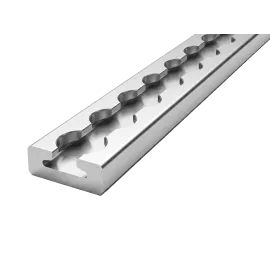
The seat track range provides aluminium anchoring rails for aircraft seats, cargo restraint systems and cabin equipment. Seat tracks accept stud and stud-fitting hardware along a standardized...
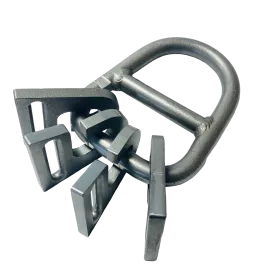
The lifting ring is a stainless steel delta ring fitted with 4 flat hooks, used as the central gathering point of a lifting net assembly. Each hook is sewn to one corner of the lifting net, and the...
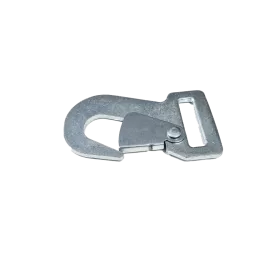
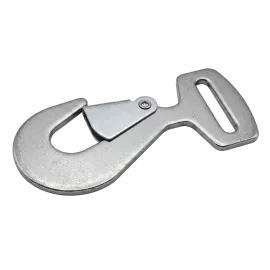
Flat snap hooks are end fittings for restraint strap assemblies, used to connect the webbing to cabin anchor rings, footman loops and floor fittings. A hinged latch is mounted on a rivet and closes...
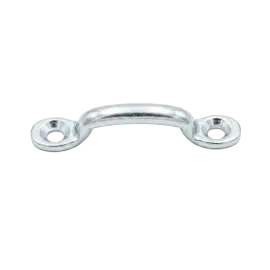
Footman loops are U-shaped bolt-down anchor points fixed to the cabin floor, cargo platform or equipment panel, giving a hook-on point for a restraint or lashing strap. They are the most common...
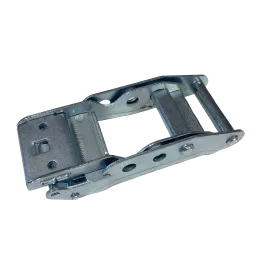
Over-center buckles are manual tensioning devices that lock the strap with a single lever movement. Compared with a ratchet, the over-center action gives fast, repeatable tension setting without...
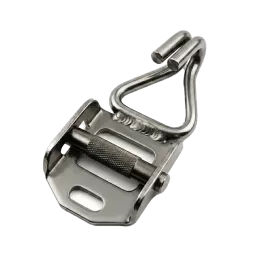
These combined fittings pair a slide adjuster with an end hook in a single part, so one component handles both length adjustment and anchoring on a 25 mm strap. They simplify light restraint...
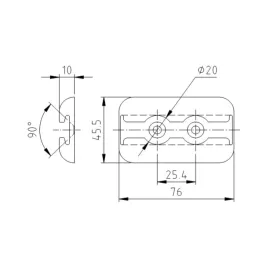
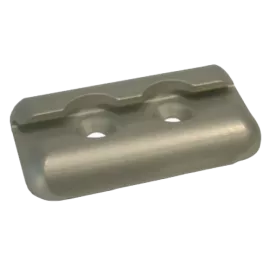
This aluminium double anchor plate provides a reinforced attachment point for stud fittings in cargo restraint assemblies that call for a higher load rating than the standard anchor plate. It...
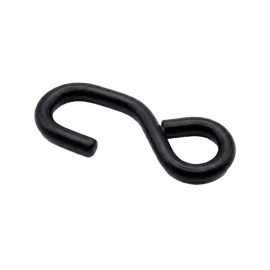
S hooks are open end fittings shaped to connect a restraint strap to a bar, anchor ring or rail. The open S-shape allows fast attachment, while latch versions add a safety catch that keeps the hook...
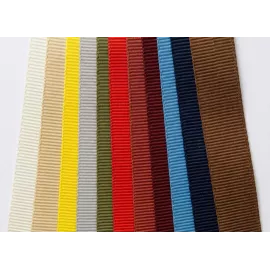
This range of 25 mm flat polyester webbing is used for restraint and lashing assemblies in air transport, where strength, regulatory compliance and color identification matter. It is approved for...
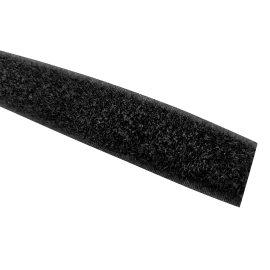
This hook-and-loop fastener system is the aerospace counterpart of standard Velcro tape, used in cabin assemblies where a removable fixture is required and where a fire-retardant textile is...
Viewed products
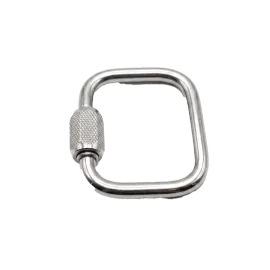
Quick links are reusable connectors with a screw-gate closure: a threaded sleeve runs along the gate to lock the link closed once a strap or ring is engaged. They replace permanent shackles where a...
Snap latches for 25 mm webbing, 680 daN ultimate load, zinc-plated steel. Spring-loaded quick-release closure for cabin restraint and equipment assemblies.